
Technical Guides
Natural vs. Precipitated Barium Sulphate: Choosing the Right Grade for Coatings
Natural and precipitated barium sulphate share the same core chemistry, but their production routes and grade characteristics can differ. For coatings, compare particle-size distribution, purity, optical properties and binder demand against the intended formulation rather than selecting by category alone.
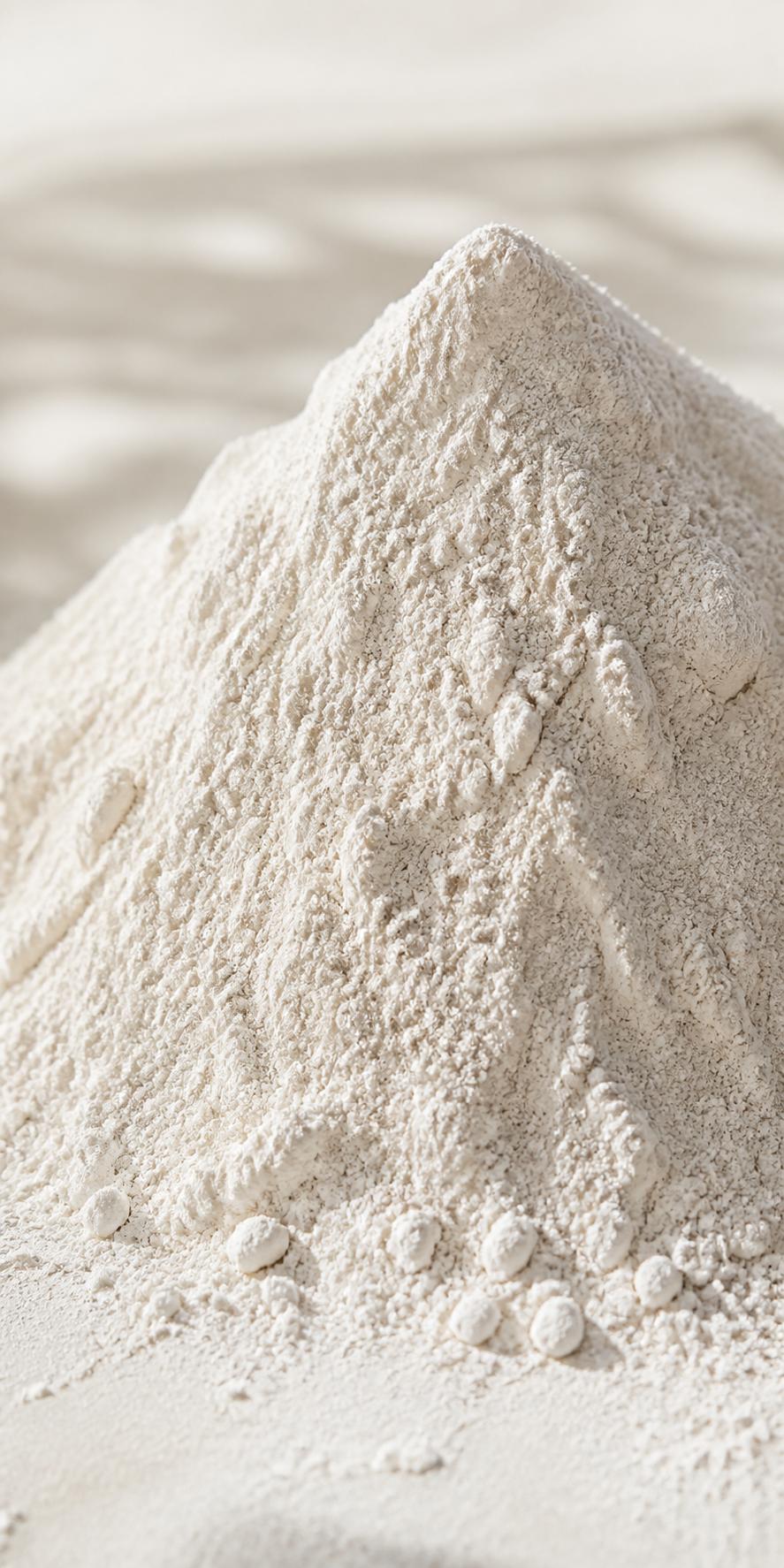
Natural barium sulphate and precipitated barium sulphate are both based on BaSO4. They reach the coating formulator through different production routes, which influence the technical profiles available within each family.
Natural barium sulphate comes from the mineral barytes, also called barite. It is processed through mineral beneficiation, grinding and classification, with further processing depending on the grade. Precipitated barium sulphate is synthetically produced through controlled chemical precipitation and is commonly called blanc fixe.
The practical question is whether a particular grade provides the particle-size distribution, purity, optical properties, binder demand, dispersion behaviour and consistency required by the coating system. The product category alone does not establish suitability.
Key takeaways
Natural and precipitated barium sulphate are families of grades. Neither is universally superior, and a production route does not by itself determine particle size, oil absorption or final gloss.
Compare actual grade specifications using compatible test methods, then confirm performance in the intended coating formulation before approval.
Same chemistry, different production routes
Natural grades retain a mineral origin. Beneficiation removes unwanted mineral components, while grinding, micronisation and classification shape the commercial particle-size profile. Mineral quality and processing both affect the resulting properties. Coating-grade natural material can be highly refined and fine; natural origin does not imply a coarse or low-whiteness product.
Precipitated grades are produced by controlled chemical precipitation. This route is generally associated with high chemical purity and controlled particle characteristics, and fine grades with narrow particle-size distributions are widely available. It does not mean that every precipitated grade is finer than every natural grade.
Particle size and particle-size distribution
Particle size and particle-size distribution (PSD) influence dispersion, surface smoothness, gloss, film appearance and packing behaviour. A single nominal size cannot show the balance of fine particles and coarse fractions, or whether two grades will pack similarly within a pigment system.
Fine particles can support smoother, higher-gloss surfaces when adequately dispersed. Coarser or deliberately engineered distributions can be useful where different surface or gloss characteristics are required. These are grade characteristics, rather than absolute rules separating natural and precipitated materials.
Compare the full available PSD, its measurement method and the relevant coarse fraction. Similar headline sizes can conceal differences that matter to surface finish and processing.
Purity, whiteness and colour control
Precipitated barium sulphate is commonly considered when very high purity and controlled optical properties are important. Natural barytes can also be supplied in high-whiteness coating grades, although mineral source and processing influence impurity profile and colour.
Compare actual BaSO4 content, specified whiteness or brightness measurements, colour values, impurity limits, moisture and soluble matter where relevant. Whiteness, brightness and colour measurements are not interchangeable; keep their test methods and definitions with the results. Distinguish typical values from agreed specification limits.
Oil absorption and binder demand
Oil absorption provides a useful comparison parameter for the amount of liquid needed to wet a powder under a defined test. It helps frame binder demand, but is not a direct prediction of behaviour in every resin system. Particle characteristics and surface condition can affect the result.
Binder demand matters to viscosity, workable filler loading and formulation economics. A grade that requires more binder or a different dispersion approach may alter the balance of the coating even when its purchase price is attractive. Neither natural nor precipitated material universally has lower oil absorption: commercial grades vary.
Compare oil absorption using the stated test method and evaluate the actual grade in the intended binder system. Formulation trials should establish viscosity, wetting and loading behaviour rather than treating a data-sheet value as a complete formulation answer.
Density and formulation economics
Barium sulphate is a relatively dense extender and filler. A given mass occupies a different volume from a lower-density filler, so weight-based substitutions do not necessarily preserve pigment volume concentration (PVC). Use the appropriate material density when calculating pigment volumes; bulk or packing density is a separate handling property.
Density also affects coating yield and spreading economics when purchasing or dosing by weight. Compare the volume of usable coating and the area covered at the required film thickness, alongside material and processing costs. A price per tonne alone is insufficient to determine formulation economics.
Settling should also be evaluated. Density contributes to settling behaviour, but particle size, dispersion and the coating’s rheology matter too. Higher density is neither inherently better nor inherently worse; assess its role within the complete formulation and handling requirements.
Dispersion, gloss and surface finish
Controlled fine grades can support smooth film development, gloss and consistent surface appearance when adequately dispersed. Fine powder must still be wetted and dispersed effectively: agglomeration can prevent the expected particle characteristics from translating into the film.
Final performance depends on the resin or binder, pigment system, PVC, dispersion process, application method, film thickness and curing or drying conditions. Neither production route nor particle size alone promises a particular gloss result. Compare trial films under the intended application and drying conditions.
Where each type may make sense
Natural barium sulphate
- A coating-grade mineral meets the required whiteness, colour and purity criteria.
- The required particle-size distribution and coarse-fraction control are available.
- The formulation calls for density, body or extender/filler functionality provided by the grade.
- Formulation economics favour the natural grade after binder demand, loading, processing and coating yield are considered.
Precipitated barium sulphate / blanc fixe
- Tightly controlled chemical purity is important to the coating system.
- A fine and/or tightly controlled particle-size distribution is required.
- Optical consistency and surface-finish requirements are demanding.
- Trials show that a controlled synthetic grade benefits the intended formulation and process.
These are selection tendencies, not universal rules. The related Natural Barium Sulphate and Precipitated Barium Sulphate product pages below provide a starting point for comparing the material families. Evaluate the specific candidate grades against the same coating requirements.
A practical grade-selection checklist
- Define the required PSD, including relevant fine and coarse fractions, rather than only a nominal particle size; confirm the measurement method.
- Compare BaSO4 content, purity and relevant impurity or soluble-matter limits.
- Specify whiteness, brightness or colour requirements with the applicable test method.
- Compare oil absorption and establish binder demand in the intended resin system.
- Check moisture requirements and coarse residue where relevant to processing and finish.
- Evaluate wetting, dispersion behaviour and the process needed to achieve an acceptable dispersion.
- Define the required gloss and surface finish and assess representative trial films.
- Identify the coating chemistry, intended loading and PVC before comparing substitutions.
- Confirm packaging, commercial quantities and sourcing requirements for the proposed grade.
- Trial the material in the actual formulation, application and curing or drying process before approval.
Choose by coating requirement and grade data
Neither natural nor precipitated barium sulphate is universally superior. The appropriate choice is application- and grade-specific. A high-quality natural grade can be technically appropriate where a formulation does not require the characteristics of a particular precipitated grade. Controlled precipitated grades can be valuable when purity, fine PSD or optical and surface requirements are especially demanding.
Define the required coating performance first, compare actual grade data and confirm the result through formulation trials. For a sourcing discussion, share the coating chemistry, target finish, technical criteria, packaging and quantity requirements through the enquiry pathway below.